
-
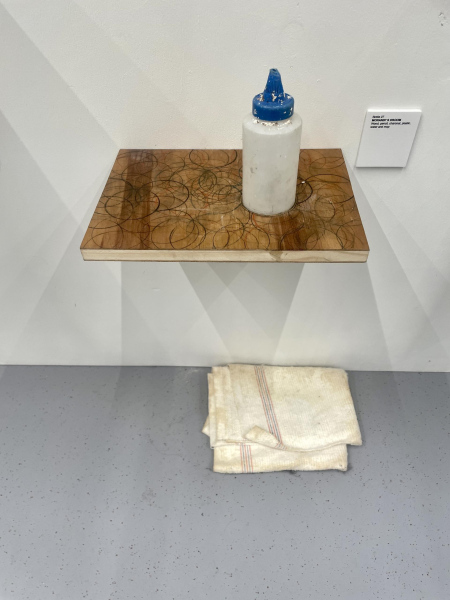 Morandi's droom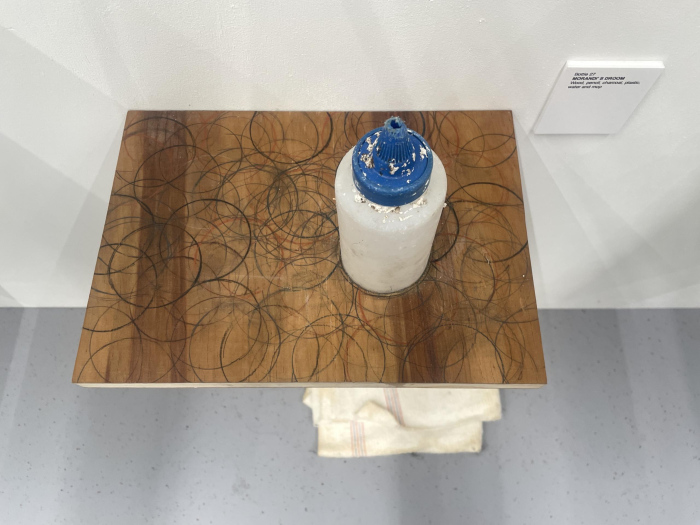
POST POLLUTION
In addition to the gallery, Raam art space Amsterdam opened its doors with the exhibition Post Pollution by Willem de Haan and 99 artists. An exhibition about the value of art, pollution and collective responsibility.
For the exhibition, Willem de Haan traveled to the Mediterranean Sea to collect 99 plastic bottles from the sea. Some were still intact, others worn down by the elements. These plastic bottles were distributed among 99 international artists, each invited to transform their bottle into an artwork and exchange it for a special-edition piece by Willem de Haan.
Waste transformed into something romantic and monetarily valuable: a message in a bottle from an artist.
Post Pollution presented these 99 artworks. If the artworks remained unsold at the end of the exhibition, they were reluctantly thrown back into the Mediterranean Sea. In doing so, visitors are placed under pressure, confronted with questions about collective responsibility.
-
 © Davide Pastore
 Point Blank Press (1998-2026)
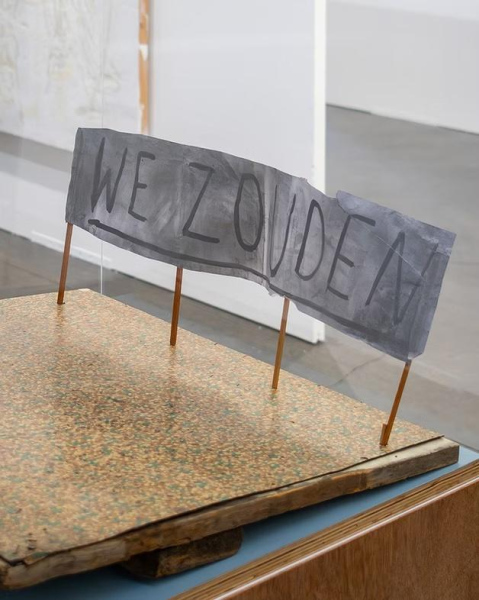 Procastration (2025)
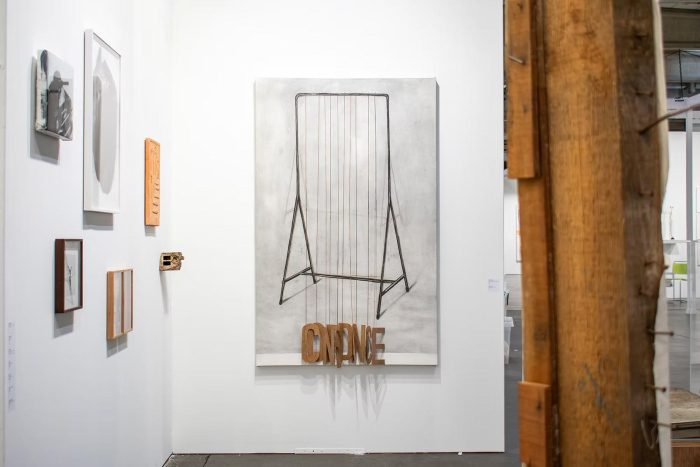 © Davide Pastore
Point Blank Press (1998-2026)
Procastration (2025)
© Davide Pastore
Point Blank Press (1998-2026)
Procastration (2025)
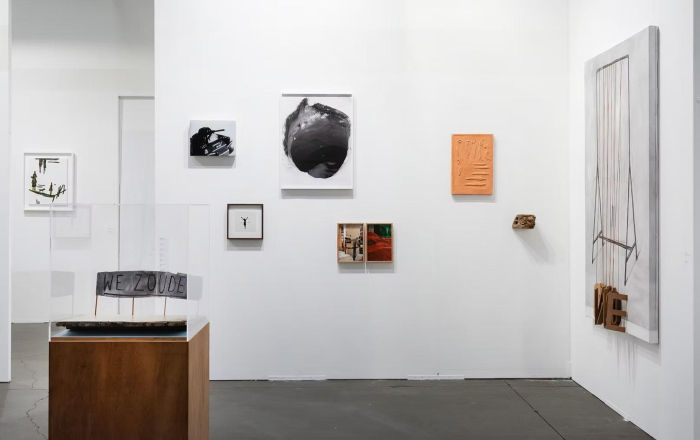
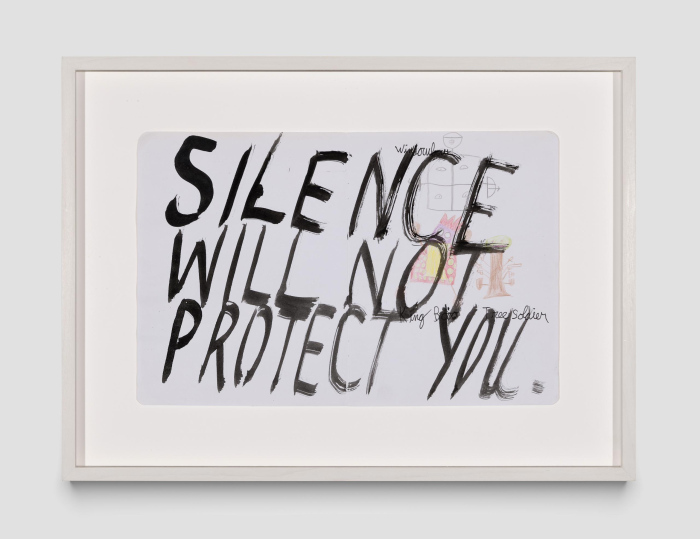
WALL OF SHAME
For months now, we have been receiving daily images of horrific injustice from Palestine. They come with a twofold sense of powerlessness. Not only do we, as viewers, feel powerless when confronted with the unlivable and inhumane reality in Palestine. The images themselves also seem to have become powerless by now: however undeniable they may be, they still have not led to a widely shared, meaningful, and political response to the genocidal violence in the region. This apparent powerlessness of current images has nothing to do with a lack of truthfulness, nor with a complexity that would surpass all representation. These images are all too real, and there is nothing complex about civilians being shot to pieces, starving children, destroyed cities, and endless streams of refugees.
Wall of Shame brings together artists who continue to commit themselves to the power of images, even when they do not immediately result in collective action or political intervention. For such images, too, can make a difference. There are several reasons for this.
First, there is an unexpected strength in showing one’s own powerlessness: an image, even an artistic image, is not a direct political intervention. Art can certainly inspire political action or call for social engagement, but it is something fundamentally different. Since its earliest beginnings, art has been associated with poiesis, or ‘construction,’ the making of something new. In doing so, the distance to the world in its current state is not denied but made visible, even when the awareness of that distance, and of our inability to change the world, inevitably gives rise to a sense of shame. Thus even the most powerless images can speak with a strong call to action.
Moreover, every successful work of art brings into being something non-real. This does not mean that making art is a gratuitous or illusory, let alone deceitful activity. On the contrary, the very act of creating can be an act of resistance, even when what is created is unmistakably ‘only’ an image. The French philosopher Gilles Deleuze called this ‘the power of the false’ and added that images ‘can restore our faith in the world.’ In one of his notebooks, the Belgian-Mexican artist Francis Alÿs also asks the following: ‘What does it mean to make art when Nimrud and Palmyra are destroyed? When the logic of ISIS is that ‘one must destroy in order to exist,’ does this mean that we must create in order to survive?’ Many of the artists in Wall of Shame are likely inclined to answer that question positively. A good artist continues to search for the radically new and the completely other, even in a world full of conflict and destruction. Their embrace of the unreal, the semblance, and the ‘image’ can even serve as tangible proof that the logic of destruction has not had the final word.
In short: the stubborn act of ‘continuing to create’ can lend an artwork a societal relevance that no longer has anything to do with a normative position. Good artists acknowledge that they, too, have no external vantage point from which a clear path for moral action or social insight might emerge. They situate themselves at the still point of the turning world—and not beside, above, or behind this turbulent world. They venture into the heart of chaos, even conflict, yet nonetheless remain standing by placing against it, time and again, an act of creation…
Text by Stéphane Symons
Author and Professor cultural philosophy and aesthetics at the Higher Institute of Philosophy at KULeuven.
© Peter Morrens
Gemaakt met Berta.me